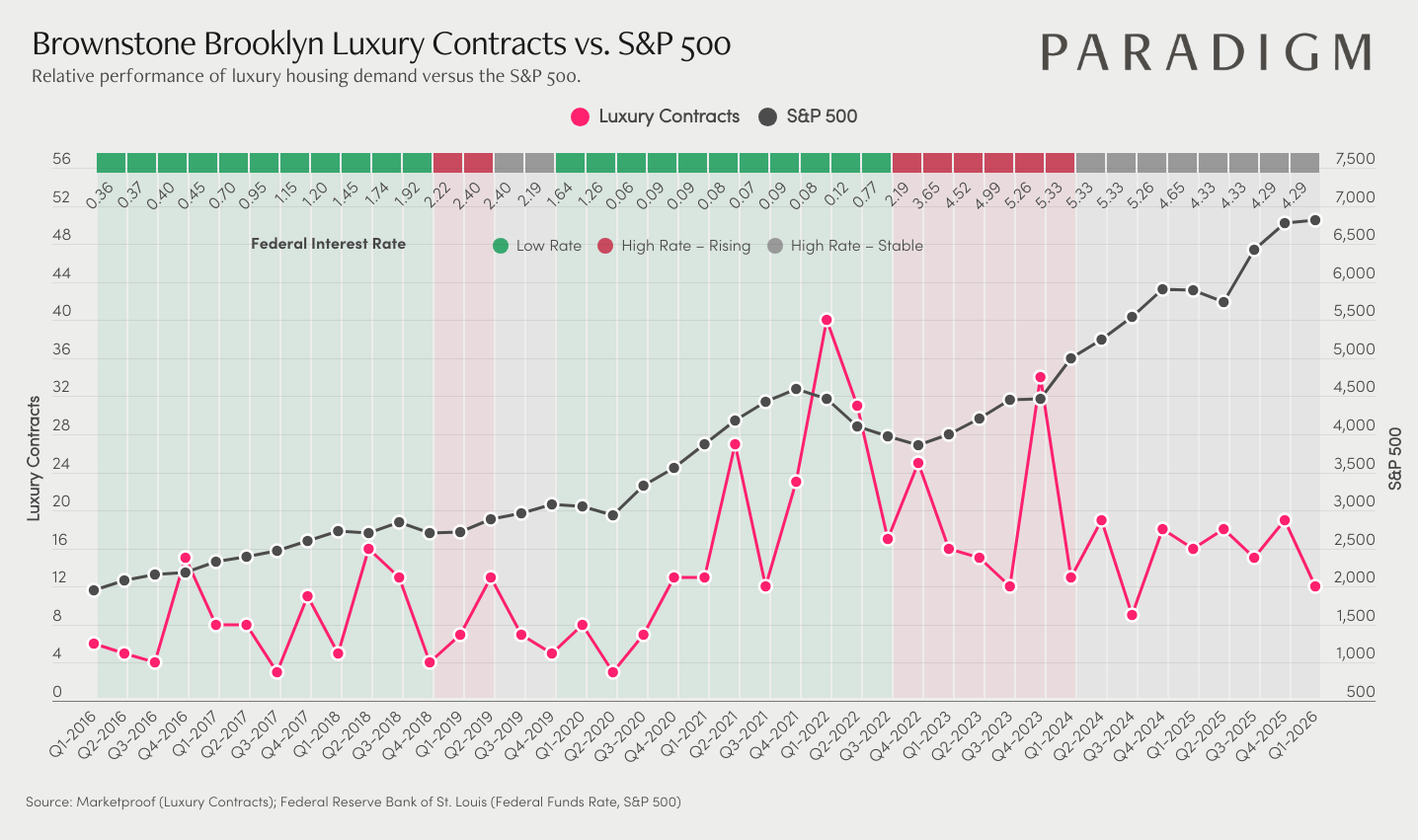
Brownstone Brooklyn stands apart from every submarket we track. While most neighborhoods saw $4M+ contract volume stay in the single digits through 2016 and 2017, Brownstone Brooklyn was already running between 15 and 40 contracts per quarter, a level that Manhattan neighborhoods with far greater name recognition were not consistently matching. That early strength set the tone for everything that followed.
The post-COVID rebound here was unlike anything else in the data. Volume climbed from around 8 contracts in early 2020 to 39 in Q1 2022, the highest single-quarter reading across any submarket in this analysis during that period. While most neighborhoods pulled back sharply as rates rose, Brownstone Brooklyn held relatively firm, with volume staying in the 16 to 32 range through much of 2022 and into 2023 before settling into a 10 to 17 range through 2024 and early 2025.
What makes this market structurally different is the buyer base. Limited new development pressure, strong neighborhood identity, and a pool of buyers that has proven less rate-sensitive than most Manhattan counterparts have kept demand more consistent here across cycles. The S&P has nearly tripled since 2016 while Brownstone Brooklyn luxury volume has grown alongside it in a way no other submarket has matched.
With contracts back around 10 to 17 heading into Q1 2026 and equity wealth at a decade high, the setup here looks similar to earlier consolidation periods that preceded the market's strongest runs. For buyers, this is one of the few submarkets where the long-term case has been consistently validated by the data. For sellers, the structural demand story remains intact, and the current environment rewards thoughtful positioning ahead of the next acceleration.
These charts plot $4M+ luxury contracts against the S&P 500 from 2016 through early 2026, overlaid with the average federal interest rates. It shows how luxury buyer demand has responded to shifting rate conditions, and where it stands relative to a decade of equity market growth.